
Is it time to seek help for your hip pain?
When hip pain affects your sleep, walking or everyday independence, a specialist assessment can help you understand your options. Mr Ashwin Unnithan will listen to your concerns, examine your hip and review your imaging with you before discussing treatment.
Your plan may include physiotherapy, appropriate pain relief, activity changes or surgery. If hip replacement is appropriate, Mr Unnithan offers both conventional and robotic-assisted techniques, and will explain honestly whether robotic assistance adds value in your case. You will have time to ask questions and consider your decision.
You might recognise these signs
- Night pain that disturbs your sleep
- Increasing stiffness or a limp
- Difficulty putting on shoes and socks or getting into a car
- A walking distance that is shrinking month by month
- Pain that is becoming harder to manage with painkillers
These symptoms are reasons to seek advice, rather than signs that surgery is inevitable.
What is a total hip replacement?
A total hip replacement replaces the damaged ball and socket of the hip with artificial components. Its aim is to reduce pain and improve movement when hip symptoms substantially affect your quality of life and non-surgical treatment is no longer helping enough, in line with NICE guidance (NG226).
Implant choice takes account of your individual needs and published long-term performance data from the National Joint Registry.
What is robotic-assisted hip replacement?
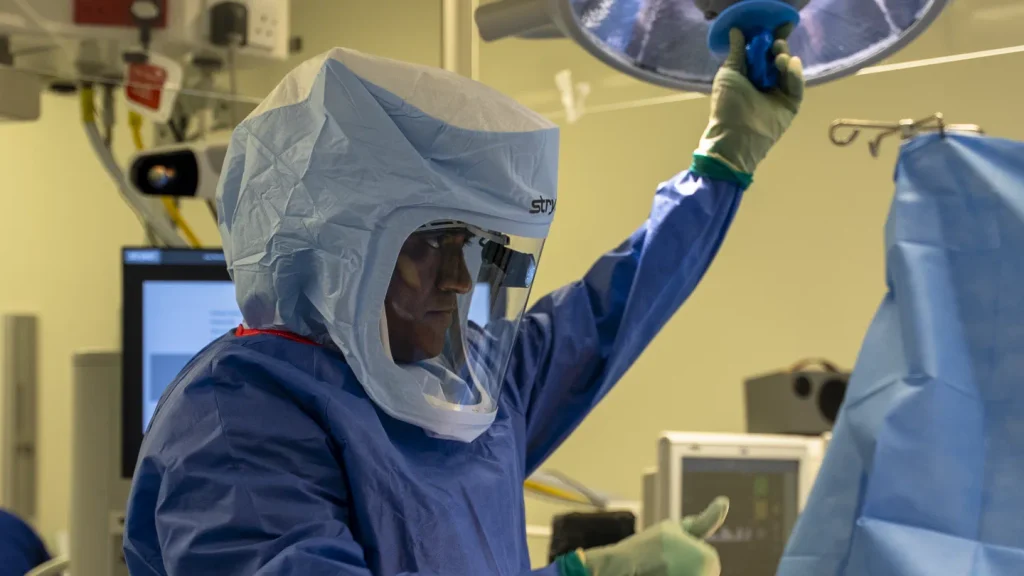
In a robotic-assisted hip replacement, a CT scan of your hip is used to build a 3D model. Mr Unnithan uses it to plan implant size, position and alignment before surgery. During the operation, the robotic system gives real-time measurements that help him assess implant position, leg length and joint stability against that plan.
The robot does not operate on its own. Mr Unnithan performs every step of the surgery, and the technology supports his decisions. Robotic assistance is not needed for every hip, and greater positioning accuracy does not by itself guarantee less pain, a faster recovery or a longer-lasting implant. Evidence comparing patient outcomes is still developing.
Why choose Mr Ashwin Unnithan for your hip replacement?
- Specialist hip training
Fellowship training at the Bristol Hip Unit and the Royal National Orthopaedic Hospital.
- Conventional and robotic-assisted options
Mr Unnithan has performed over 300 robotic-assisted hip and knee procedures combined.
- Honest patient selection
A clear explanation of when robotic assistance may help, and when it is unlikely to add value.
- Complex and revision experience
His practice includes revision hip replacement and second opinions for patients considering their options.
- Evidence-based implant choice
Implants selected with reference to long-term National Joint Registry data.
- Accessible
Appointments usually available within days, and no GP referral needed for an initial consultation.
- Professional standing
Fellow of the Royal College of Surgeons and member of the British Orthopaedic Association.
Benefits and risks
Hip replacement can substantially improve pain and mobility, but the outcome varies between patients. Potential complications include infection, blood clots, dislocation, fracture, differences in leg length, nerve or blood vessel injury, persistent pain, and implant wear or loosening that may require further surgery. These apply to both conventional and robotic-assisted surgery. Mr Unnithan will explain your individual risks and how the team works to reduce them before you decide.
At a glance
Your treatment journey
Consultation and imaging
A discussion of your symptoms and goals, an examination and X-rays. Mr Unnithan explains the surgical and non-surgical options, including whether robotic assistance may suit you.
Planning your surgery
Your plan covers implant choice, surgical approach, anaesthesia and preparation for recovery. If robotic assistance is chosen, a CT scan is used to build a 3D plan of implant size, position and leg length.
Surgery and early recovery
Your hospital team supports pain relief, exercises and getting back on your feet. You go home once you can move safely and your home arrangements allow it.
Rehabilitation and follow-up
Physiotherapy and follow-up reviews help you build strength and confidence. Your return to work, driving and sport depends on your progress.
From planning to surgery: a personalised hip reconstruction
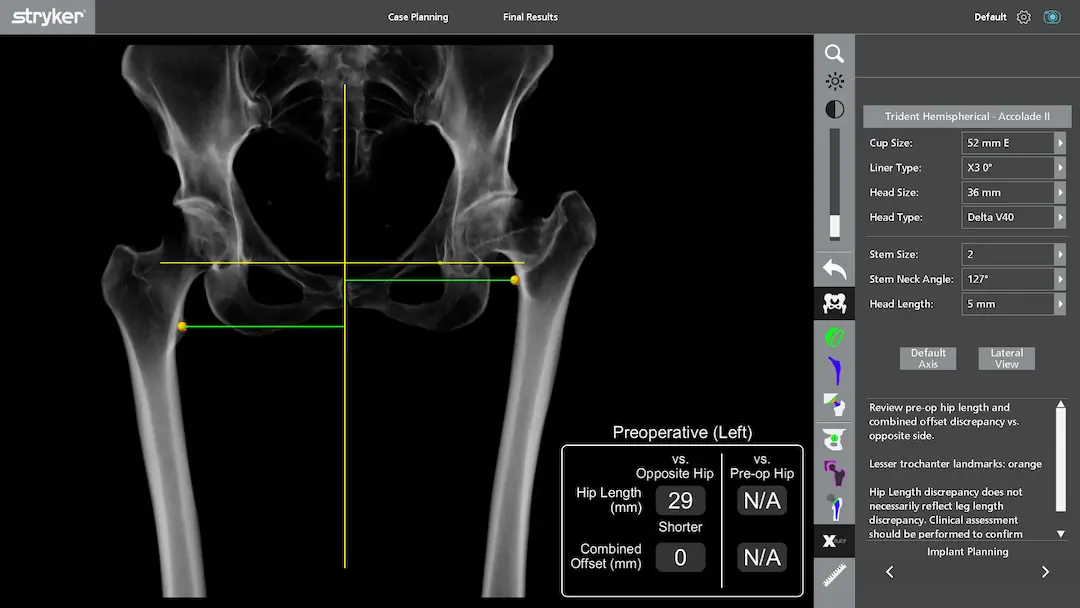
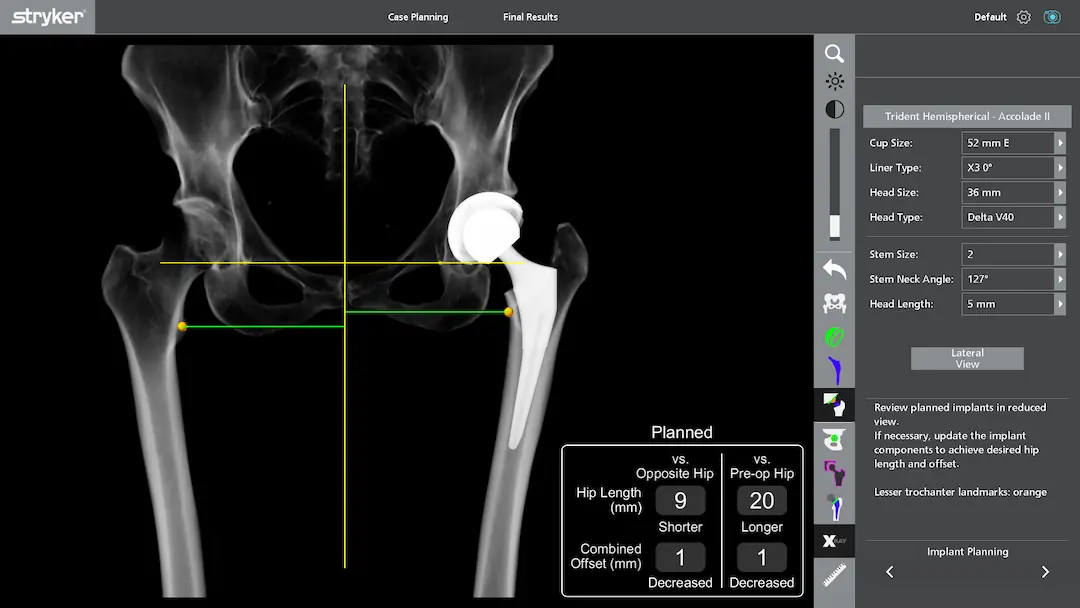
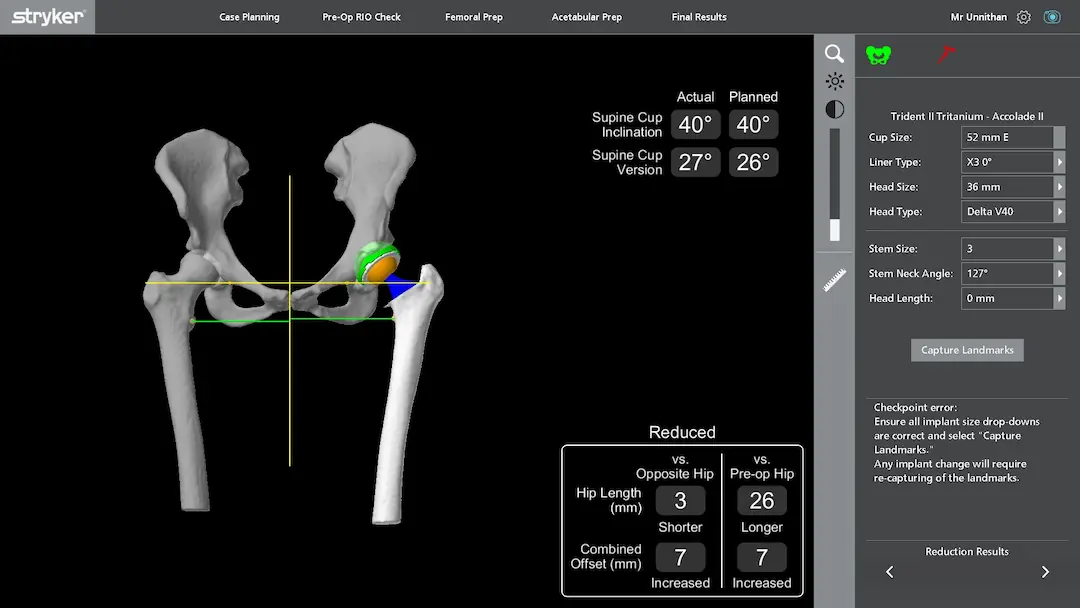
These images illustrate how CT-based planning and checks during surgery help Mr Unnithan plan and assess reconstruction of a hip with altered anatomy and shortening.
1. Understanding the hip before surgery
The CT-based planning image shows the hip anatomy and the difference in hip length before surgery.
2. Planning the reconstruction
The virtual implant plan explores implant size and position, with the aim of improving hip length and joint mechanics.
3. Checking during surgery
The robotic system displays measurements during the operation to help assess the reconstruction and guide adjustments.
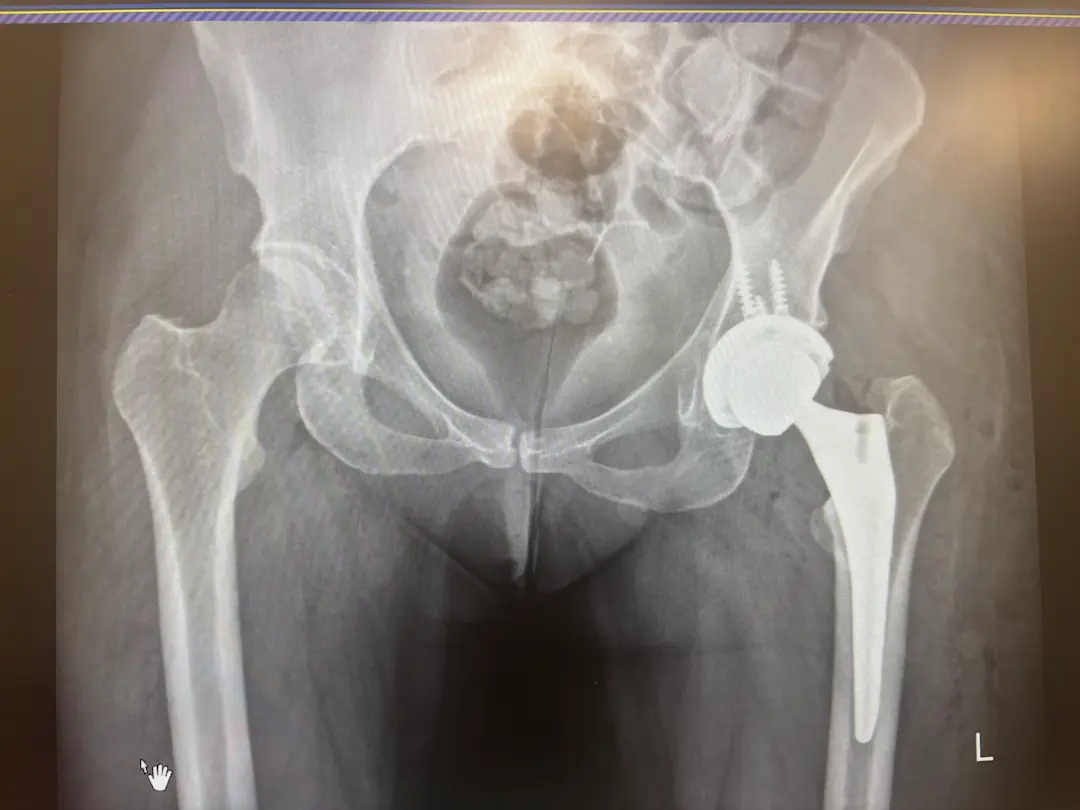
4. Reviewing the postoperative X-ray
The postoperative X-ray shows the hip replacement in place and is reviewed alongside the surgical measurements and clinical assessment.
This illustrates one patient’s treatment. Plans and outcomes vary according to individual anatomy and needs.
- COMMON QUESTIONS
Frequently asked questions about total and robotic hip replacement
How long does a hip replacement last?
Many hip replacements last 15–20 years or longer, but no implant has a guaranteed lifespan. Longevity depends on the implant, your age, activity and general health. Younger patients may need revision surgery during their lifetime.
Is robotic hip replacement better than conventional surgery?
Robotic assistance supports planning and implant positioning, with the surgeon in control throughout. It can improve the consistency of implant position, but it does not guarantee less pain, a faster recovery or a better long-term result. Evidence comparing patient outcomes is still developing.
Am I suitable for robotic hip replacement?
Mr Unnithan first assesses whether hip replacement is appropriate. Whether robotic assistance is used then depends on your anatomy, bone quality, general health and the planned procedure. He will explain the potential benefits and limitations for you.
Is hip replacement suitable for younger, active patients?
It can be, when symptoms and joint damage justify surgery. Mr Unnithan will discuss your activity goals, implant options and the possibility of further surgery later in life. Suitability is always assessed individually.
How painful is recovery?
Pain, swelling and discomfort are expected after either technique and usually ease as you recover. Your anaesthetic and pain-relief plan helps you start moving safely. Walking aids are reduced as your strength, balance and comfort improve.
Will I need physiotherapy?
Yes. Whether or not robotic assistance is used, structured physiotherapy is essential to regain strength, movement and confidence after a hip replacement.
When can I drive again?
Usually from around six weeks, after checking with your surgeon. You must be able to control the car and perform an emergency stop safely, without being impaired by pain or medication. Check your insurer’s requirements too.
Do I need a GP referral?
No GP referral is needed for an initial consultation, and appointments are usually available within days. If you are using medical insurance, check whether your insurer requires a referral or authorisation.
Quick appointment request
We’ll call you back within one working day.
Handled in line with UK GDPR — used only to arrange your appointment.