GMC 6040444 · FRCS (Tr & Orth) · Clinics in Wimbledon, Kingston, Chertsey & Woking

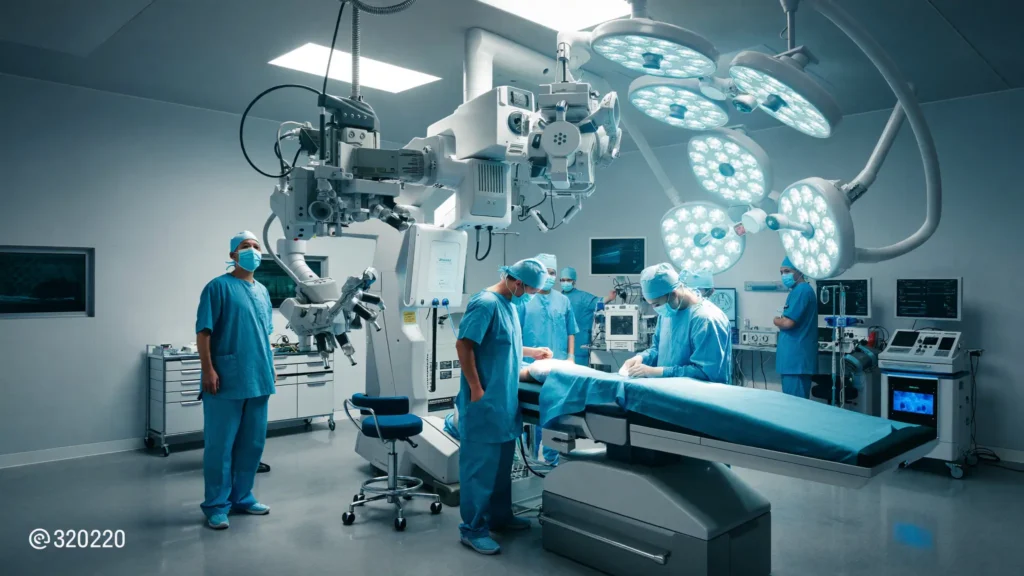
Robotic guidance supports the surgery. Mr Unnithan performs every part of it.
Before you reach the theatre, a CT scan of your joint is used to build a detailed 3D model. This lets Mr Unnithan map implant size, position and alignment in advance, so the operation is planned around your exact anatomy rather than an average.
In theatre, the robotic system tracks Mr Unnithan’s instruments in real time and keeps them within the boundaries set during planning. This helps protect healthy soft tissue and place the implant exactly where it was designed to sit.
Because the implant is positioned with this level of accuracy, the joint is designed to move and load more naturally from the outset – supporting a smoother rehabilitation and a more comfortable return to daily activity.
Beyond the operating theatre, Mr Unnithan contributes actively to the evidence base behind modern joint replacement. His work has featured in peer-reviewed journals and at international meetings across Europe and the US, and he was awarded first prize for his presentation at the British Trauma Society meeting in 2014. He continues to teach and share his approach with colleagues in the field.
Neither approach is inherently “safer” in isolation – both are well-established, and outcomes depend heavily on the surgeon’s experience and your individual case. What robotic assistance adds is consistency: it helps translate a carefully planned position into the actual surgery, reducing the room for small variations that manual technique alone can introduce.
That depends on the shape and condition of your joint, which can only be properly judged from your imaging. Many patients are suitable candidates, but this is confirmed individually at consultation rather than assumed in advance.
Costs depend on your specific treatment plan and provider, so this is best clarified directly with the practice before you commit to anything. If you have private medical insurance, it is also worth checking your policy, as coverage for robotic-assisted procedures isn’t always identical to conventional surgery.
Broadly, no – the overall recovery journey follows a similar timeline to conventional surgery. Where patients do notice a difference, it tends to be in the early weeks, when the added precision can translate into a more comfortable start to rehabilitation. As always, individual recovery varies and is discussed honestly with you beforehand.