
Is it time for a partial knee replacement?
When arthritis in just one part of the knee starts stealing your sleep, your walks and your independence, a partial knee replacement can help reduce pain and improve everyday function – often with a smaller operation and quicker recovery than a full knee replacement. Mr Ashwin Unnithan is a Consultant Orthopaedic Surgeon with a specific clinical interest in unicompartmental knee replacement, and at your consultation he reviews your imaging with you and discusses every option, including non-surgical measures, so surgery is only recommended when it is appropriate for you.
Mr Unnithan offers both conventional and robotic-assisted partial knee replacement, with implant selection informed by long-term performance data from the National Joint Registry, and plans surgery around your own anatomy and activity level rather than a standard template.
You might recognise these signs
- Knee pain confined mainly to one side of the joint
- Night pain that disturbs your sleep
- Walking distance shrinking month by month
- Increased dependence on painkillers
If your knee pain is mainly on one side, an assessment can help establish the cause. Pain location alone does not determine suitability: examination, weight-bearing X-rays and the condition of your ligaments and other knee compartments all matter.
What is a partial knee replacement?
A partial, or unicompartmental, knee replacement resurfaces only the damaged section of the knee – commonly the inner (medial) compartment – leaving the healthy cartilage, ligaments and bone elsewhere in the joint untouched. Because less of the knee is altered, many patients experience a more natural-feeling knee, a shorter hospital stay and a faster return to activity compared with a total knee replacement.
Not every patient with knee arthritis is suitable for this approach – it depends on which parts of the knee are affected and the health of your ligaments – which is why careful assessment and imaging at consultation are essential before recommending it.
Where both partial and total knee replacement are suitable, Mr Unnithan will discuss the benefits and risks of each so you can make an informed choice. Risks include infection, blood clots, stiffness, persistent pain, implant loosening and the need for further surgery. Your individual risks will be explained at consultation.
Why choose Mr Ashwin Unnithan for partial knee replacement?
- Specific clinical interest
Unicompartmental knee replacement is an area of Mr Unnithan’s clinical practice.
- Minimally invasive technique
As a minimally invasive hip and knee replacement surgeon, the surgical approach is tailored to your knee and aims to preserve healthy tissue.
- Robotic precision where appropriate
Robotic-assisted planning can help fine-tune implant positioning and knee balance in suitable patients.
- Knee pain but not sure it's arthritis?
Catching or locking needs assessment to establish the cause. Arthroscopy is appropriate for selected problems and is not routinely recommended for osteoarthritis pain.
- Highly experienced consultant
Over ten years’ experience as a Consultant Orthopaedic Surgeon managing both straightforward and complex knee cases.
- Careful patient selection
An honest assessment of whether a partial or total knee replacement – or an osteotomy – genuinely suits your knee.
- Local accessibility
Consultations at hospitals across Surrey and south-west London. Contact the practice secretary for availability. Insured patients should check referral and authorisation requirements.
- Recognised standing
Fellow of the Royal College of Surgeons, member of the British Orthopaedic Association and American Academy of Orthopaedic Surgeons.
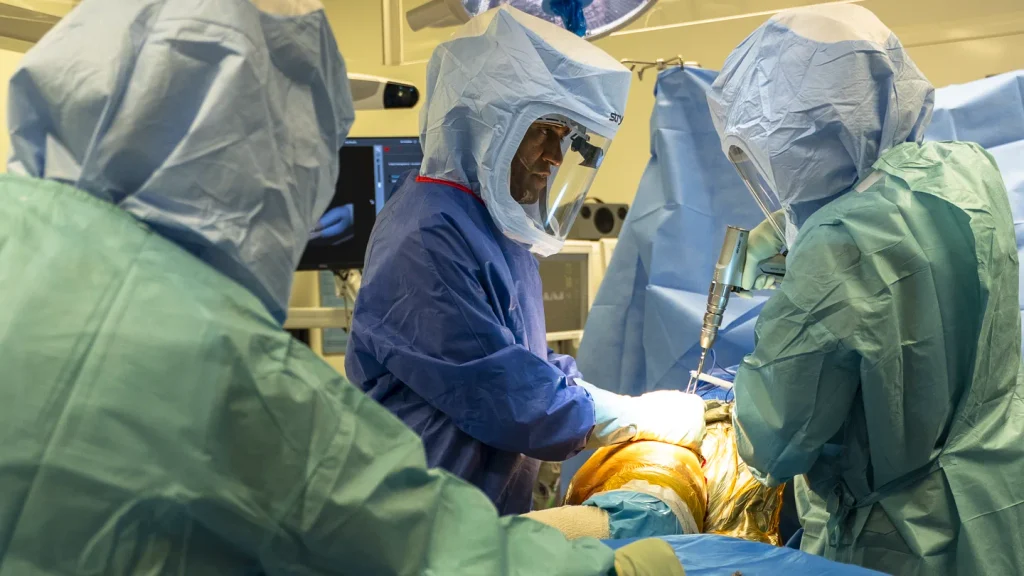
At a glance
Your treatment journey
Consultation & imaging
X-rays, a thorough examination and an honest discussion of whether a partial or total knee replacement suits your knee.
Planning
A personalised surgical plan is built, with 3D robotic planning where suitable, to protect your healthy compartments and ligaments.
Surgery & recovery
Because only part of the knee is treated, some patients go home the same day or after an overnight stay. Walking starts with support as soon as it is safe. Your discharge timing depends on your progress and support at home.
Rehab & follow-up
Structured physiotherapy and scheduled reviews help you regain strength and confidence, with many patients returning to activity faster than after a total knee replacement.
Personalised planning with Mako robotic assistance
These images show how Mr Unnithan uses the Mako CT-based system to plan a partial knee replacement and assess the knee during surgery. The 3D model and measurements support decisions about implant positioning and joint balance, with the surgeon in control throughout.
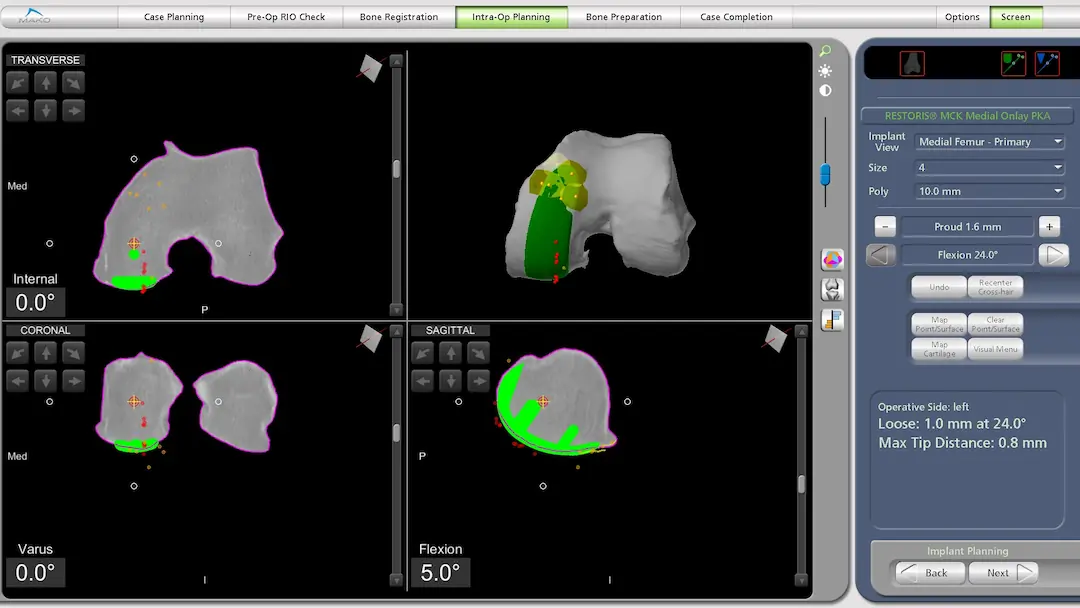
Personalised implant planning
CT-based views help Mr Unnithan plan the size and position of the replacement on the thigh-bone side of the knee.
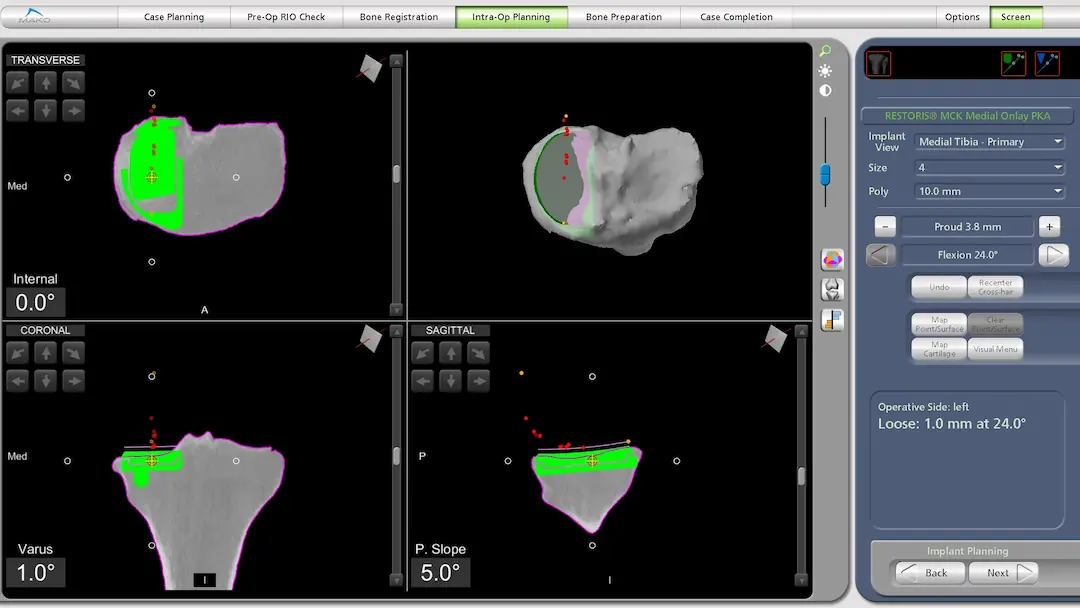
Planning the matching component
The implant’s position is assessed from several angles, with treatment focused on the affected inner compartment.
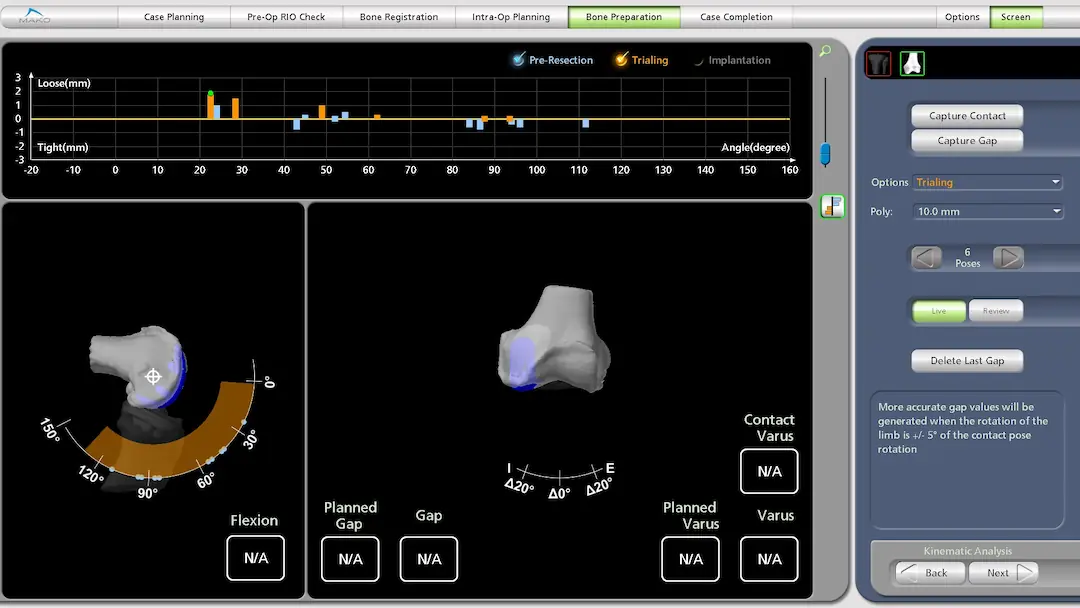
Checking movement and balance
Measurements taken at different bending angles help Mr Unnithan assess joint balance during surgery.
These images illustrate planning and checks during one patient’s surgery. Treatment and outcomes vary according to individual needs.
Before and after partial knee replacement
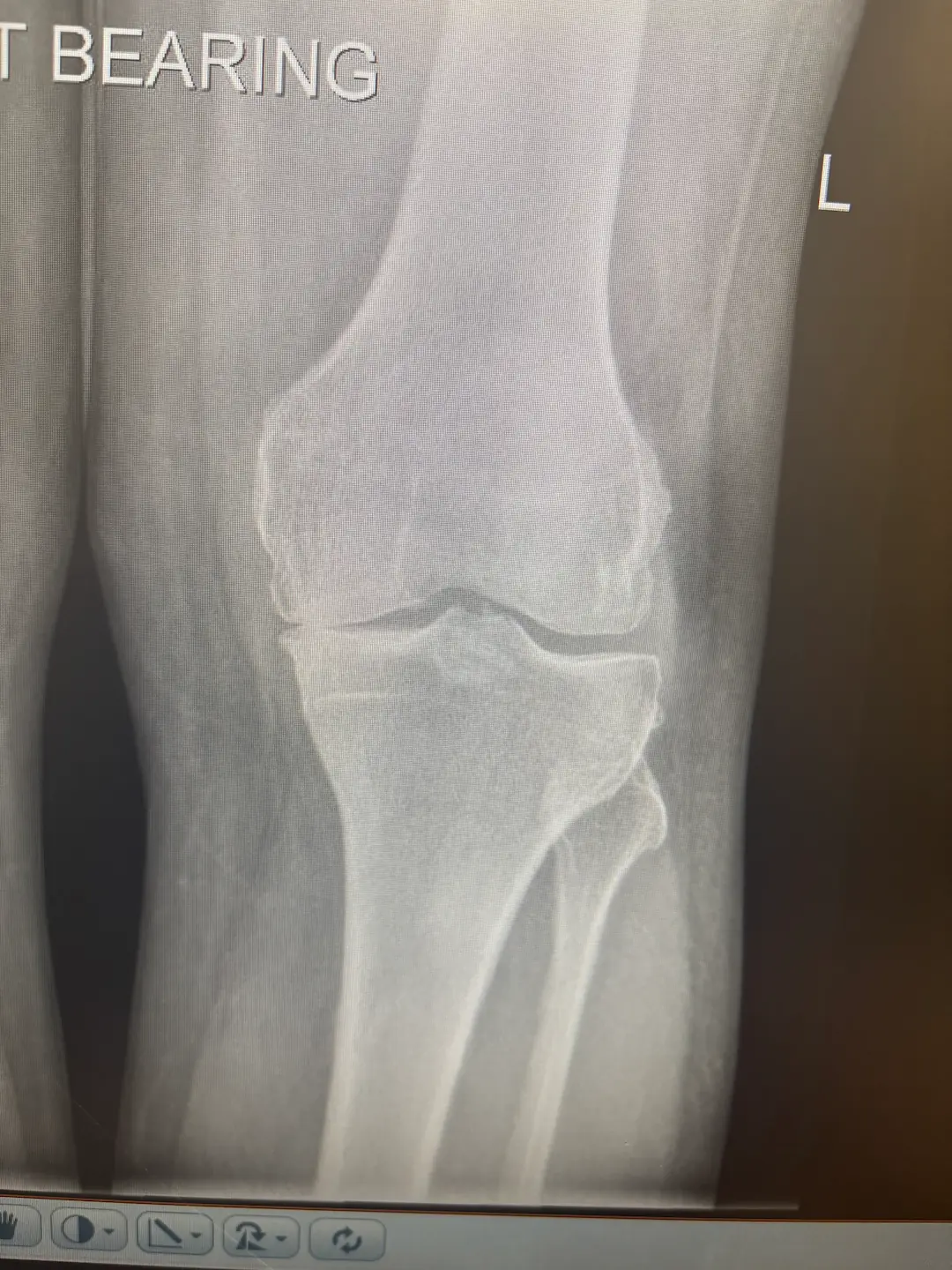
Before surgery: X-ray of the left knee before partial knee replacement.
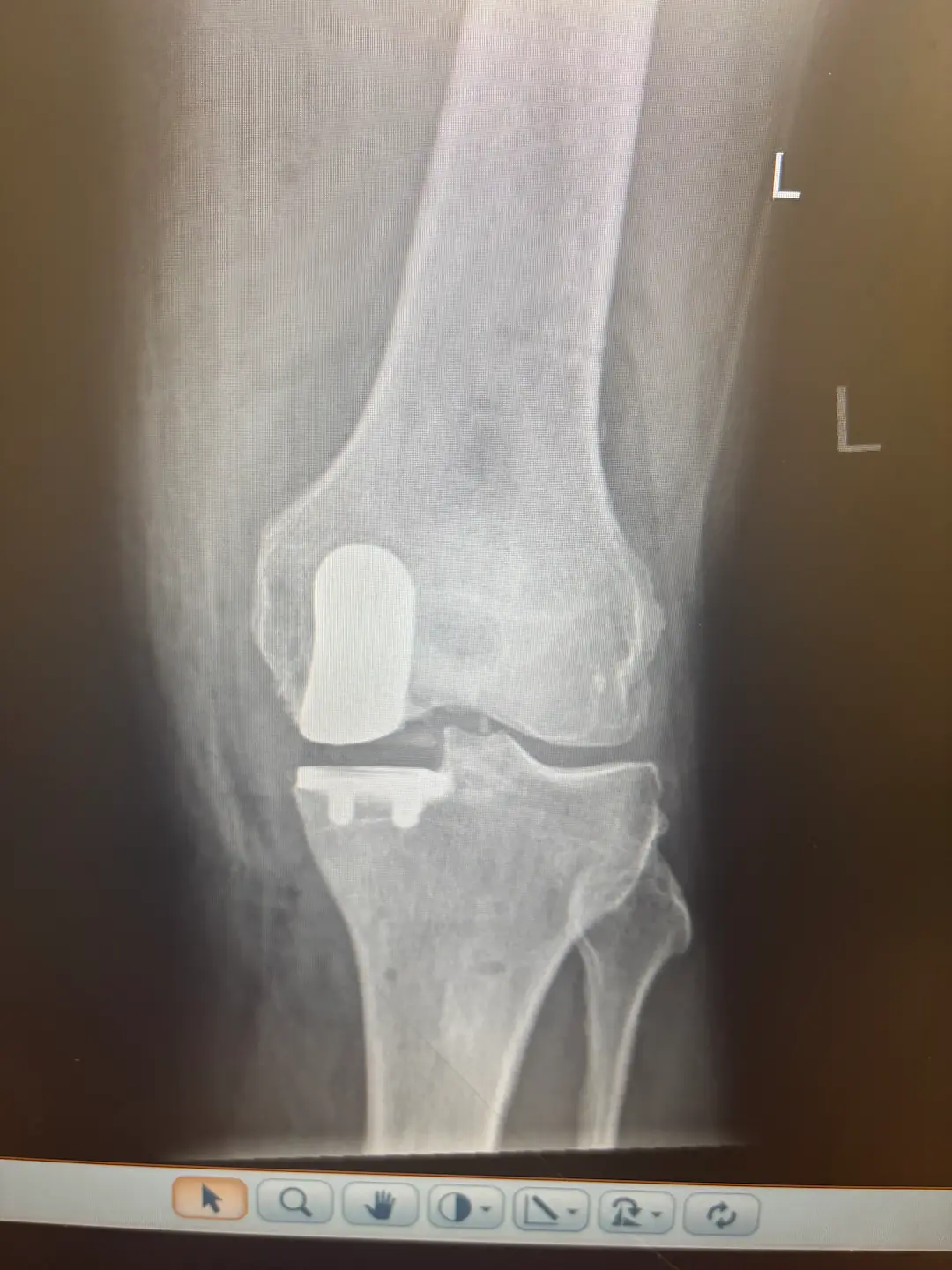
After surgery: X-ray showing the partial knee replacement in the inner compartment of the left knee.
The X-rays show the appearance of the joint before and after surgery. Pain relief and recovery are assessed separately at follow-up.
- COMMON QUESTIONS
Frequently asked questions about partial knee replacement
What is the difference between a partial and total knee replacement?
A partial knee replacement resurfaces only the damaged compartment of the knee, leaving healthy bone, cartilage and ligaments in place, whereas a total knee replacement resurfaces the whole joint. Partial replacement is only suitable when arthritis is confined to one area.
What is a partial knee replacement, in simple terms?
It is an operation that resurfaces only the worn part of the knee, leaving healthy bone, cartilage and ligaments untouched elsewhere in the joint.
How do I know if I need a partial or total knee replacement?
This is determined through examination and imaging at consultation, assessing which compartments of the knee are affected and the condition of your ligaments, in line with current NICE guidance on osteoarthritis referral.
Is recovery faster after a partial knee replacement?
Generally, yes. As less tissue is disturbed, many patients experience less pain, a shorter hospital stay of one night in suitable patients, and a quicker return to walking and daily activities compared with a total knee replacement.
Does a partial knee replacement feel more natural than a total knee replacement?
Many patients report their knee feels more like their own natural joint, since the anterior and posterior cruciate ligaments and healthy compartments are preserved.
Will I eventually need a total knee replacement after a partial one?
Some patients do progress to a total knee replacement years later if arthritis develops elsewhere in the joint, while others may need further surgery because of implant wear, loosening or other complications. A partial replacement can last many years, but its lifespan varies. Mr Unnithan will discuss the likelihood of further surgery when comparing partial and total replacement.
Can I have a partial knee replacement with robotic assistance?
Yes, robotic-assisted planning is available where suitable, supporting implant positioning and assessment of knee balance. The surgeon remains in control, and robotic assistance does not guarantee a faster recovery or a better long-term result.
Quick appointment request
We’ll call you back within one working day.
Handled in line with UK GDPR — used only to arrange your appointment.