
Is it time for a knee arthroscopy?
If your knee is locking, catching or giving way, or has not settled with physiotherapy, keyhole surgery may help. Mr Ashwin Unnithan is a Consultant Orthopaedic Surgeon with a clinical interest in knee arthroscopy and meniscal repair.
At consultation, he reviews your imaging with you and discusses every option, including physiotherapy and injections. Keyhole surgery is only recommended when it is likely to help. If a torn meniscus is found and can be repaired, he favours repairing it over removing it.
You might recognise these signs
- A twisting injury followed by knee pain
- Knee catching, locking or giving way
- Swelling that builds after activity
- Pain along the inner or outer joint line that doesn't settle
- Knee pain that hasn't improved with physiotherapy
These signs are worth an honest discussion about the cause, and whether arthroscopy could help.
What is a knee arthroscopy?
Knee arthroscopy is keyhole surgery. A fine camera (arthroscope) and small instruments go in through two or three small cuts, showing the inside of the joint on a screen. This lets Mr Unnithan confirm the cause of your symptoms and, in the same procedure, treat many problems: a torn meniscus, loose fragments of cartilage or bone, or inflamed joint lining (synovium).
Most patients go home the same day, and recovery is quicker than after open knee surgery.
Meniscal repair: preserving your knee's shock absorber
The meniscus is a C-shaped cushion of cartilage that absorbs shock and stabilises the knee. Tears often follow a twisting injury in younger people, or come with gradual wear in older people.
A torn meniscus can be trimmed (partial meniscectomy) or stitched back together (meniscal repair). Repair preserves more of the meniscus. A 2023 meta-analysis found that meniscal repair was associated with a lower rate of progression to knee osteoarthritis than partial meniscectomy, at around six years’ follow-up.
Not every tear can be repaired. It depends on the tear’s location, pattern, how long it has been present and its blood supply. MRI helps with planning, and the final decision is confirmed during the arthroscopy. Recovery after repair is longer than after trimming, because the repair needs time to heal.
When arthroscopy is not the right answer
NICE guidance (NG226) advises against arthroscopic washout or debridement for osteoarthritis alone, because evidence does not show meaningful benefit. Arthroscopy is more appropriate for mechanical symptoms such as locking or catching, or a confirmed meniscal tear. This is why an accurate diagnosis at consultation matters.
Why choose Mr Ashwin Unnithan for knee arthroscopy and meniscal repair?
- Named clinical interest
Knee arthroscopy and meniscal repair are among Mr Unnithan’s listed clinical interests.
- Repair over removal where possible
A preference for preserving the meniscus when the tear pattern and blood supply allow.
- Diagnosis first
Where imaging is inconclusive, arthroscopy gives a direct view of the joint and allows treatment in the same sitting.
- Honest, evidence-led advice
A clear explanation of when arthroscopy is likely to help and when it is not.
- Senior experience
Over ten years as a Consultant Orthopaedic Surgeon, with a trauma fellowship in New Zealand and further training at the Royal National Orthopaedic Hospital.
- Accessible
Appointments usually available within days, and no GP referral needed for an initial consultation.
- Professional standing
Fellow of the Royal College of Surgeons, member of the British Orthopaedic Association, and a British Trauma Society prize-winner.
Benefits and risks
Arthroscopy can relieve mechanical symptoms and confirm a diagnosis through small incisions. Results vary with what is found and treated. Risks are uncommon but include infection, blood clots, bleeding into the joint, stiffness, nerve injury and ongoing pain. A repaired meniscus may not heal, and further surgery is occasionally needed. Mr Unnithan will explain your individual risks before you decide.
At a glance
Your treatment journey
Consultation and imaging
An examination, MRI review where needed, and an honest discussion of whether arthroscopy is the right next step, and whether a tear looks repairable.
Planning
A personalised plan for what will be assessed and treated. If repair is likely, it covers weight-bearing limits and any brace after surgery.
Surgery and recovery
Performed through small keyhole incisions, usually as a day case. Most patients walk the same day; after a repair, weight-bearing is protected while it heals.
Rehabilitation and follow-up
Guided physiotherapy and a scheduled review. Most patients return to daily activity within a few weeks, or over a few months after a repair.
Understanding knee arthroscopy
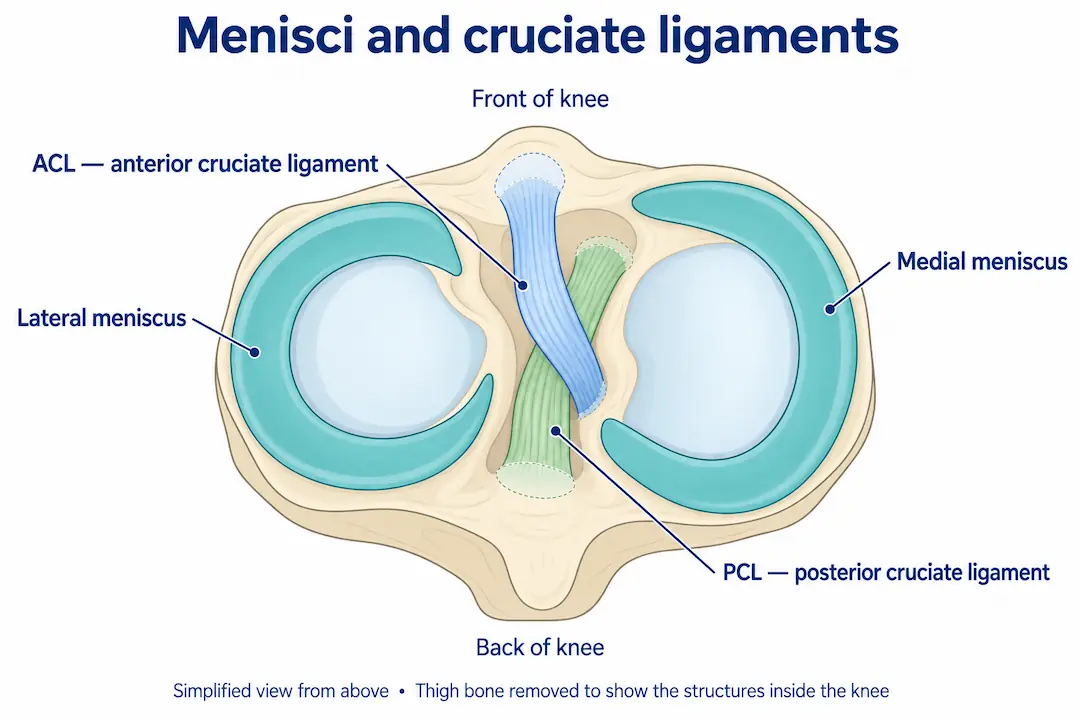
Menisci and cruciate ligaments: a simplified view from above.
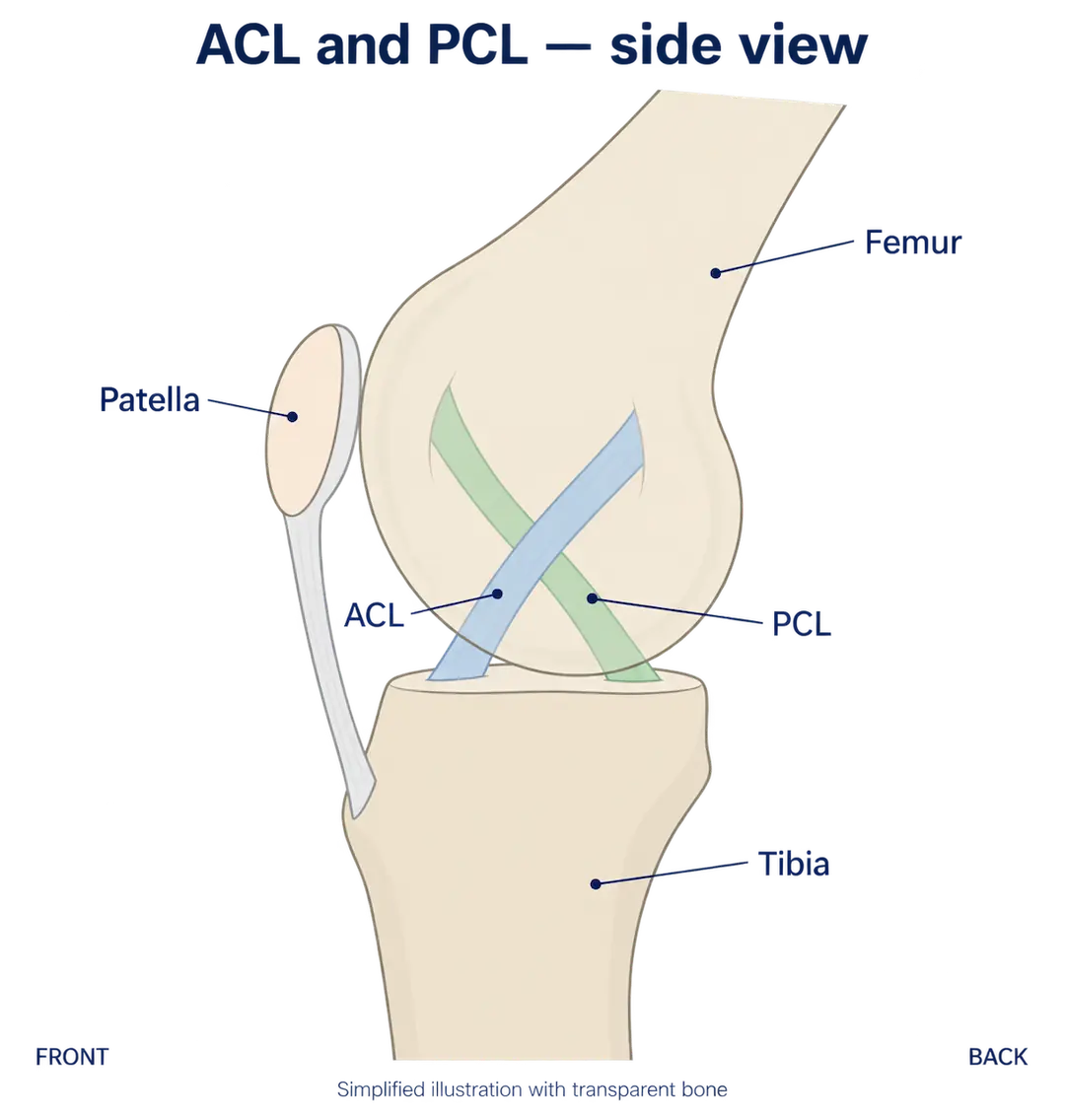
ACL and PCL: a simplified side view of the ligaments inside the knee.
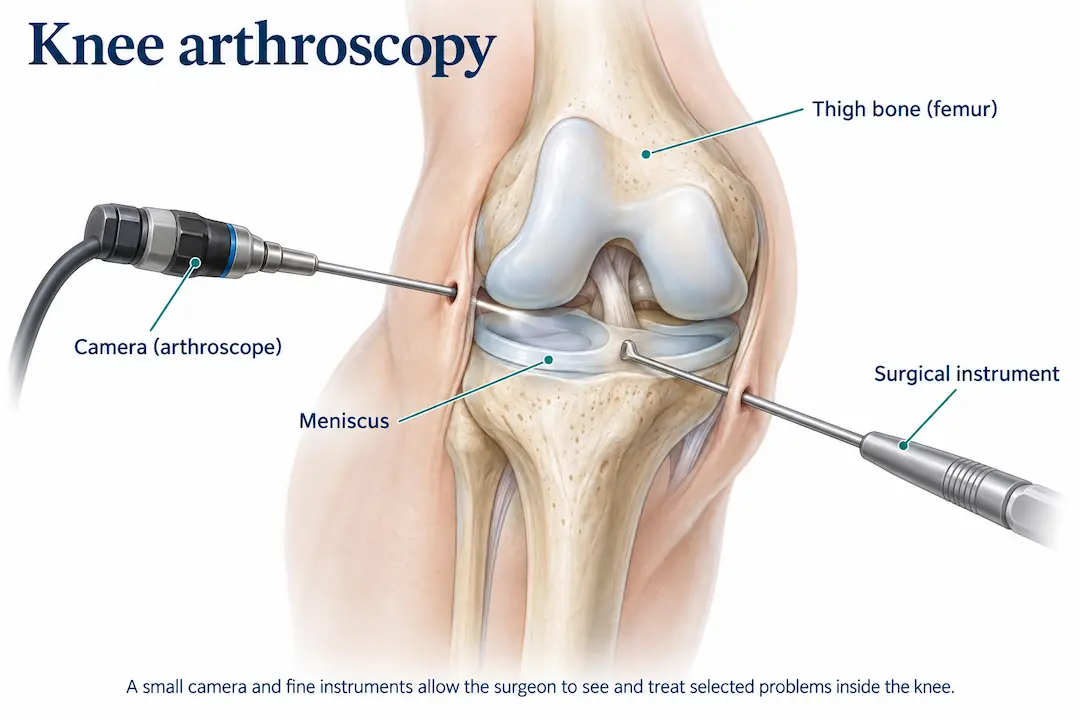
A small camera and fine instruments allow the surgeon to see and treat selected problems inside the knee.
- COMMON QUESTIONS
Frequently asked questions about knee arthroscopy and meniscal repair
What is knee arthroscopy used for?
It diagnoses unclear knee symptoms by looking directly inside the joint. In the same procedure it can treat a torn meniscus, loose bodies, damaged cartilage or inflamed joint lining. Mr Unnithan will explain likely findings from your imaging beforehand.
Is knee arthroscopy a day case procedure?
Yes. In most cases you go home the same day, after a general or regional anaesthetic. Your team will confirm the plan for your operation, including whether a short overnight stay is advised.
What is the difference between meniscal repair and meniscectomy?
A meniscectomy trims away the torn part of the meniscus. A repair stitches the tear so the meniscus can heal. Where the tear is suitable, repair preserves more of the knee’s shock absorber, but recovery takes longer.
Can all meniscal tears be repaired?
No. It depends on the tear’s location, pattern, how long it has been present and its blood supply. Mr Unnithan assesses this from your MRI and confirms the decision during surgery.
How long is recovery after knee arthroscopy?
After a diagnostic arthroscopy or a trim, most patients walk the same day and return to light activities within one to two weeks. After a meniscal repair, protected weight-bearing and rehabilitation mean full activity usually takes around three to four months.
Will I need a brace or crutches?
After a simple arthroscopy, crutches are usually only needed briefly, if at all. After a meniscal repair, many patients use crutches and sometimes a brace for several weeks to protect the repair. This is confirmed individually.
Is it painful afterwards?
Discomfort is usually mild to moderate and managed with simple pain relief, as the incisions are small. Recovery after a repair needs more patience, because the knee is protected while the stitches heal.
How soon can I be seen?
Appointments are usually available within days, and no GP referral is needed for an initial consultation. If you are using insurance, check whether your insurer requires a referral.
Quick appointment request
We’ll call you back within one working day.
Handled in line with UK GDPR — used only to arrange your appointment.